
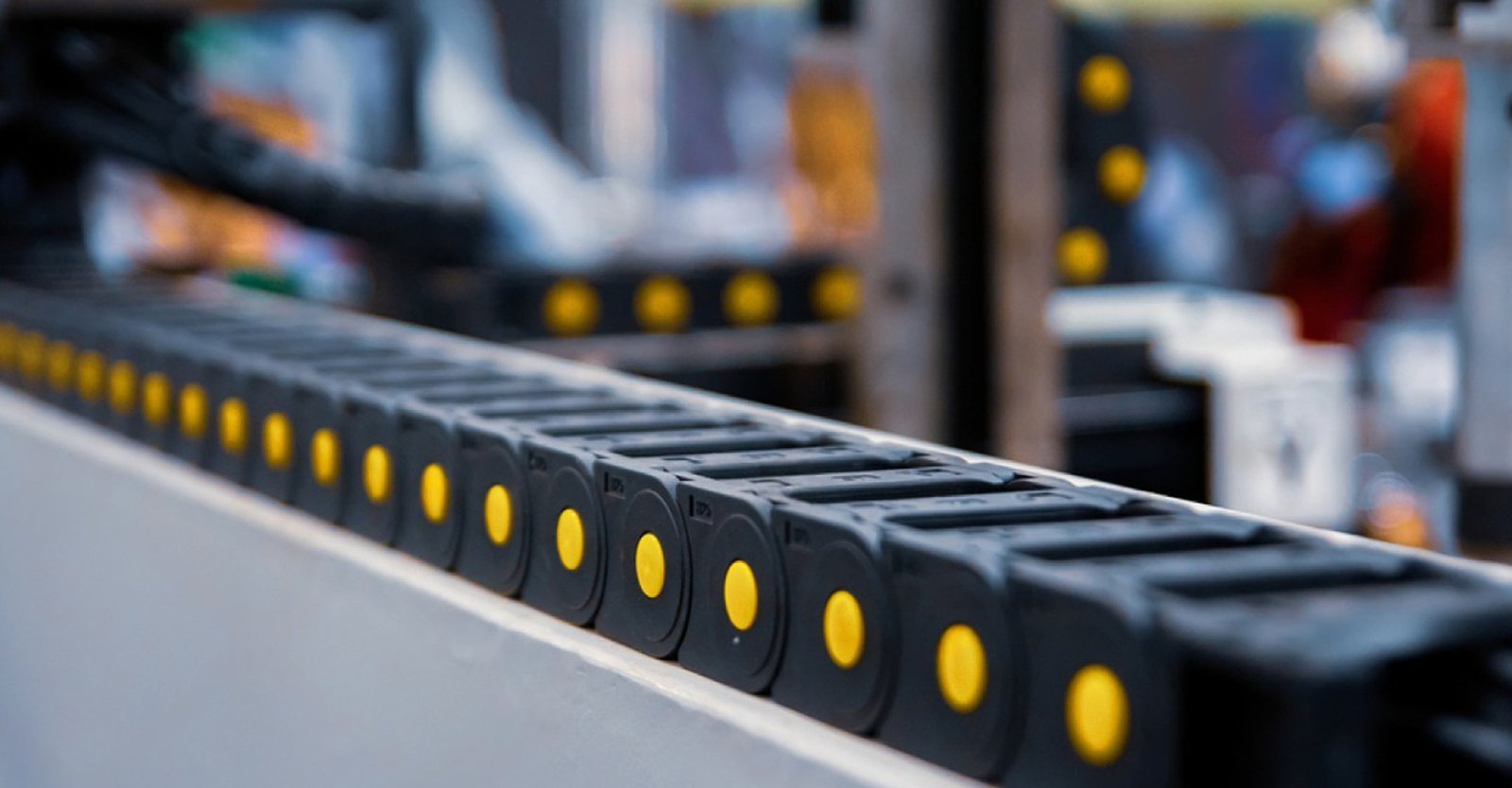
How to Select the Right Drag Chain for Your Application
Introduction
Selecting the right drag chain is one of the most important steps in ensuring reliable cable protection in moving applications. A properly selected drag chain protects cables and hoses from mechanical stress, prevents tangling, and improves the life of the entire system.
On the other hand, choosing the wrong drag chain can result in excessive cable wear, unexpected downtime, and increased maintenance costs. To avoid these issues, several technical parameters must be evaluated before making a selection.
1. Understand Your Application Requirements
The first step is understanding where and how the drag chain will be used. Every machine has different motion patterns, speeds, environmental conditions, and cable loads.
- CNC machines require compact and precise movement
- Robotic systems require flexibility and high cycle life
- Cranes require longer travel lengths and heavy-duty support
- Steel plants require resistance to harsh environments
The application environment determines the type, size, and material of the drag chain.
2. Measure Cable and Hose Dimensions Carefully
Accurate cable and hose measurements are essential to determine the drag chain's internal dimensions. Both the diameter and quantity of cables affect the required inner width and inner height.
Cables should not be tightly packed inside the drag chain. Adequate spacing is necessary to reduce friction, improve heat dissipation, and allow smooth movement.
3. Select the Correct Bending Radius
Every cable has a minimum bending radius specified by the manufacturer. The drag chain must support a radius equal to or greater than that minimum.
If the bending radius is too small, the cable experiences repeated stress during movement, which can damage insulation and internal conductors.
- Prevents insulation cracking
- Reduces conductor fatigue
- Increases cable life
4. Consider Travel Length and Movement Type
Travel length is the total distance the drag chain moves during machine operation. This is critical for determining chain stability and support requirements.
For short travel lengths, lightweight polyamide chains are often sufficient. For longer travel distances, stronger metal drag chains may be needed to prevent sagging.
Movement type also matters. High-speed reciprocating applications may require specialized designs for better stability.
5. Calculate Load Capacity
The drag chain must support the total weight of all cables and hoses placed inside it. This includes cable weight, hose weight, and any additional dynamic load during motion.
If the chain is overloaded, it may sag, deform, or fail prematurely, affecting both cable safety and machine operation.
Need Expert Help Selecting a Drag Chain?
Explore our industrial-grade polyamide and metal drag chains designed for diverse applications.
View Products6. Evaluate Environmental Conditions
Operating conditions have a direct impact on drag chain performance. Temperature, dust, moisture, chemicals, and mechanical impact all influence material selection.
- Polyamide chains are ideal for clean indoor environments
- Metal chains perform better in harsh industrial conditions
For industries like steel plants, foundries, and heavy machinery, metal drag chains offer superior durability under extreme stress.
7. Choose the Right Drag Chain Material
The final step is selecting the right material based on operating conditions, load, and travel length.
Choose Polyamide Drag Chains When:
- Load is moderate
- Noise reduction is important
- Corrosion resistance is required
- Cost efficiency is important
Choose Metal Drag Chains When:
- Heavy load support is required
- Travel length is long
- Environment is harsh
- High structural strength is needed
Conclusion
Selecting the right drag chain requires careful consideration of cable dimensions, bending radius, travel length, load capacity, and environmental conditions.
A properly selected drag chain improves cable protection, minimizes downtime, and enhances machine reliability, resulting in better operational efficiency and lower maintenance costs.
Looking for Expert Guidance?
Contact CKS Cable Solutions for customized drag chain recommendations.
Contact Us